
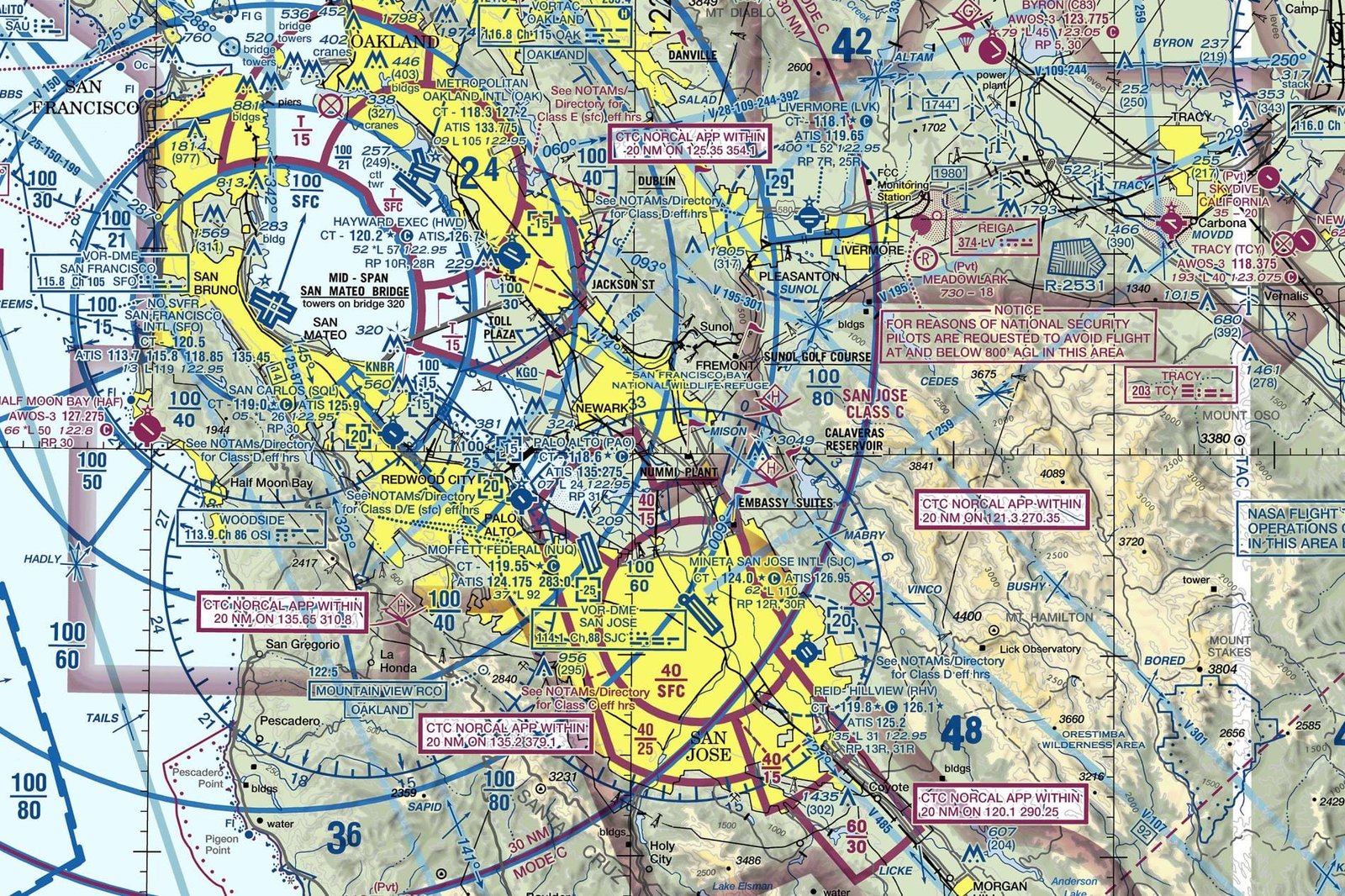
The sky is more complicated than you've ever thought. To a normal person, when they look up, all they see is the clear blue sky. But pilots, on the other hand, manage a complex 'invisible infrastructure' that allows them to operate safely in the sky. What are they?
Photo: foxnews.com
There are two categories of airspace: regulatory and nonregulatory. Within these two categories, there are four types: controlled, uncontrolled, special use, and other airspace. Starting with controlled airspace. Controlled airspace includes the different classifications of airspace and defined dimensions within which air traffic control (ATC) is available in agreement with the airspace classification. Controlled airspace consists of:
• Class A
• Class B
• Class C
• Class D
• Class E
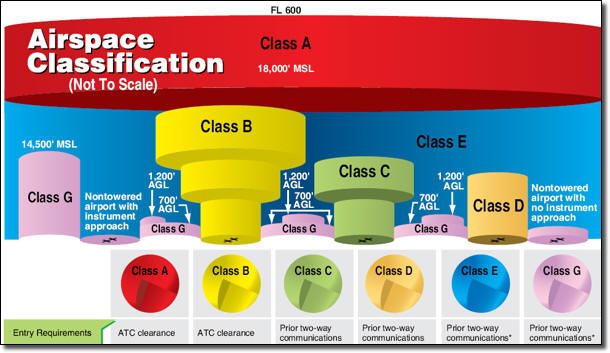
Photo: pilotworkshops.com
Meanwhile, uncontrolled airspace or Class G airspace, according to FAA, is the part of the airspace that has not been designated as Class A, B, C, D, or E. Hence it’s identified as uncontrolled airspace. Class G airspace extends from the surface to the base of the overlying Class E airspace. Even though air traffic control doesn’t have the authoritarian to control air traffic, the responsibility lies on the pilots themselves. To follow the visual flight rules (VFR) minimums that apply in uncontrolled airspace.
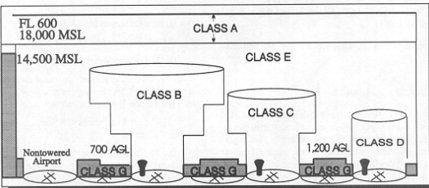
Photo: myflyingstuff.com
Special use airspace or special area of operation (SAO) is the airspace where certain activities are restricted or where limitations may be imposed on aircraft operations that are not part of those activities. Special use airspace usually consists of:
• Prohibited areas
• Restricted areas
• Warning areas
• Military operation areas (MOAs)
• Alert areas
• Controlled firing areas (CFAs)
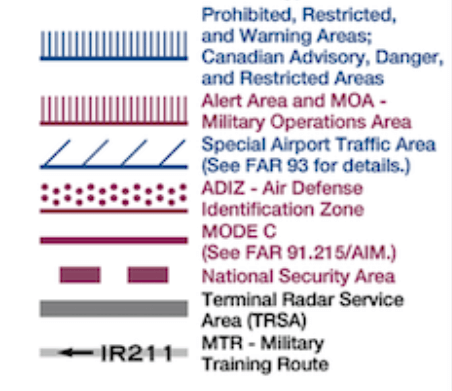
Photo: bobbielind.com
Finally, “Other airspace areas” is the name used for the majority of the remaining airspace. So what do you think? Too much? Everything you’ve read so far is the simplest way possible to explain airspaces. Since every airspace needs an article by itself. All I did was provide the stepping stone, that will help you gain a bit of understanding regarding airspaces. Every airspace has its own set of rules that pilots have studied thoroughly in order for flying to keep its position as the safest mode of transportation.
Source:
_https://www.faa.gov/regulations\_policies/handbooks\_manuals/aviation/phak/media/17\_phak\_ch15.pdf_