
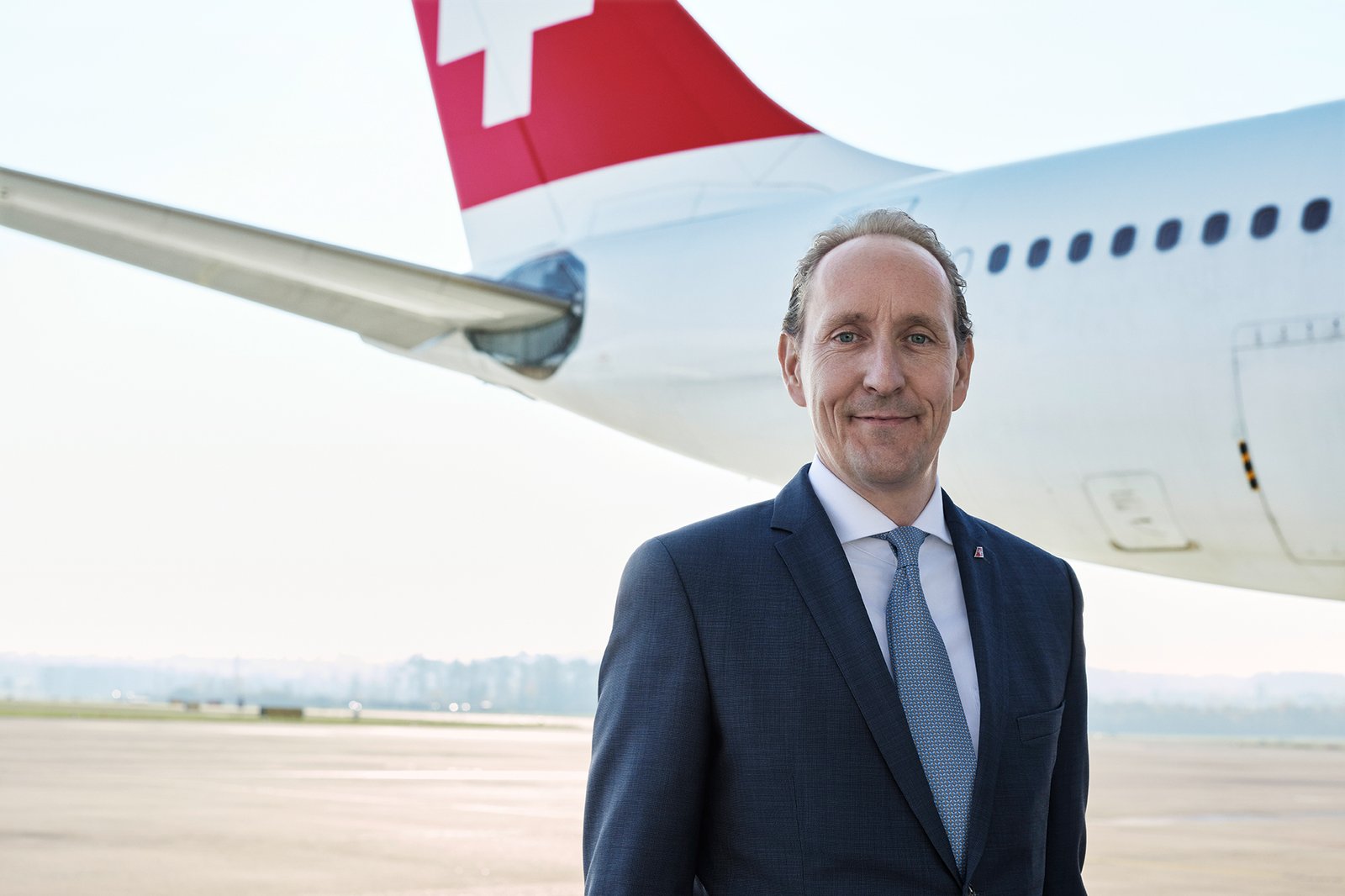
One of the leading airlines in the Star Alliance and Lufthansa Group, SWISS served a grand total of 12.8 million passengers in 2022. While the airline progresses on the road to recovery from the pandemic, it is continuing to expand with the addition of new routes and the creation of environmental initiatives. As the carrier returns its last parked aircraft into service, I put some questions to SWISS CEO Dieter Vranckx.
What lessons has SWISS learned from the pandemic?
'I think those times really underlined to us how valuable teamwork is. It was a hugely difficult time for
our industry, but it brought us as a company even closer together. The more flexible we had to be, the
more important a true sense of togetherness became. I personally realized once again how vital this is.
Our people are spread all over the world, but we all carry our SWISS Spirit with us wherever we may
be. It’s unique. And it’s something we can really be proud of. Every crisis is an opportunity to reset the
company and get it fit again for the next decade."
SWISS currently has Airbus A350s on order, for delivery in 2025. Are these set to become the flagship of the SWISS fleet?
"With our new Airbus A350s, we’re taking a big step forward in further modernizing our fleet. It’s a very
quiet and, above all, a very fuel-efficient aircraft which will help us further reduce our carbon
emissions. The A350 produces some 25 percent fewer carbon dioxide emissions than the A340. And
that will make a massive difference over the longer term. Overall, we have one of Europe’s most
advanced aircraft fleets, which is a big positive for both our carbon footprint and our customers’ air
travel experience. However, the Boeing 777 will remain our long-haul flagship."
Archived image unavailable.
SWISS plans to take delivery of its first Airbus A350 in 2025. Photo: One mile at a time
After almost three-quarters of a decade in the fleet, how well has the Airbus A220 catered to SWISS’s needs?
"We were the first airline in the world to put the Airbus A220 into operation. We’ve always believed in
the success of this twinjet, with its technological advances and its offer of just the right capacity and
cabin comfort. Since its introduction, the A220 has served us very well. Our passengers appreciate the
sleek cabin, and our pilots are very happy with its advanced cockpit. The A220 also helps give us one
of Europe’s most advanced aircraft fleets. And this in turn enables us to meet all our environmental
responsibilities. Its carbon dioxide emissions are more than 20 percent lower than those of
predecessor aircraft types. So all in all, we’re proud to have 30 of these innovative aircraft in our
ranks."
Archived image unavailable.
Photo: SWISS
How are you lessening the environmental impact of SWISS’s aircraft?
"We’ve set ourselves the ambitious goals of halving our net carbon dioxide emissions from their 2019
levels by 2030 and being entirely carbon-neutral by 2050. Numerous concrete measures are required
to achieve this. Modern fuel-efficient aircraft are one of our biggest levers. Our fleet is one of the
youngest in Europe, which has a hugely positive effect on our carbon footprint.
Another central plank in our environmental endeavors is the use of sustainable aviation fuel. We’re
passionate about this, and we’ve partnered up with the Synhelion company to help bring their solar
aviation fuel to market. We’re looking forward to becoming the first airline in the world to use this
‘sun-to-liquid’ carbon-neutral fuel.
We also harness the latest technologies at SWISS to make our operations more efficient and thus
more sustainable. Last year, we became the world’s first passenger airline to adopt the innovative
AeroSHARK technology. By applying this transparent film to the fuselage and the engine nacelles of
our Boeing 777s, we’ve made every one of their flights about one percent more fuel-efficient."
What do you see as the biggest challenge in the aviation industry at the moment?
"Well, for some time now, one of the bigger challenges for us and for many other airlines has been the
well-publicized restrictions that are currently imposed on certain types of engines. For us at SWISS,
this is affecting the Airbus A220 fleet and the Airbus A320neo aircraft family. As a result of it, we’re
not yet able to offer our customers as much of our own capacity as we otherwise could, because we
always have some of our aircraft on the ground undergoing intensified maintenance checks as a result
of these engine issues.
In this regard, our wet-lease partners Helvetic Airways and Air Baltic come into play. It was thanks to
them that we were able to maintain our planned schedule volumes this summer and operate those
services with a stability of over 99 percent. In the current 2023/24 winter timetable, we have four
aircraft of Air Baltic and an average of eight aircraft from Helvetic Airways operating our SWISS
services on our behalf."
Archived image unavailable.
Photo: SWISS
Finally, what else can we expect from SWISS in the near future?
We’ll be further expanding our route network: Washington, DC and Toronto will be added to our long-- haul destinations next year, and we’ll also be introducing new services to Košice in Slovakia, Cluj- Napoca in Romania and Rotterdam in the Netherlands. We’re also very excited about ‘SWISS Senses’, our new end-to-end travel experience that will give us, among other things, completely new cabin interiors in all classes on our long-haul fleet. The new cabins will be gradually installed from 2025 onwards. Our new First Class cabin will offer every guest total privacy with a lockable sliding door, and some of our new Business Class seats can also be closed off with a sliding door. It’ll be the most comprehensive cabin renewal in our company’s history. Our new Airbus A350s will already be equipped with the new SWISS Senses interior when they enter service.