
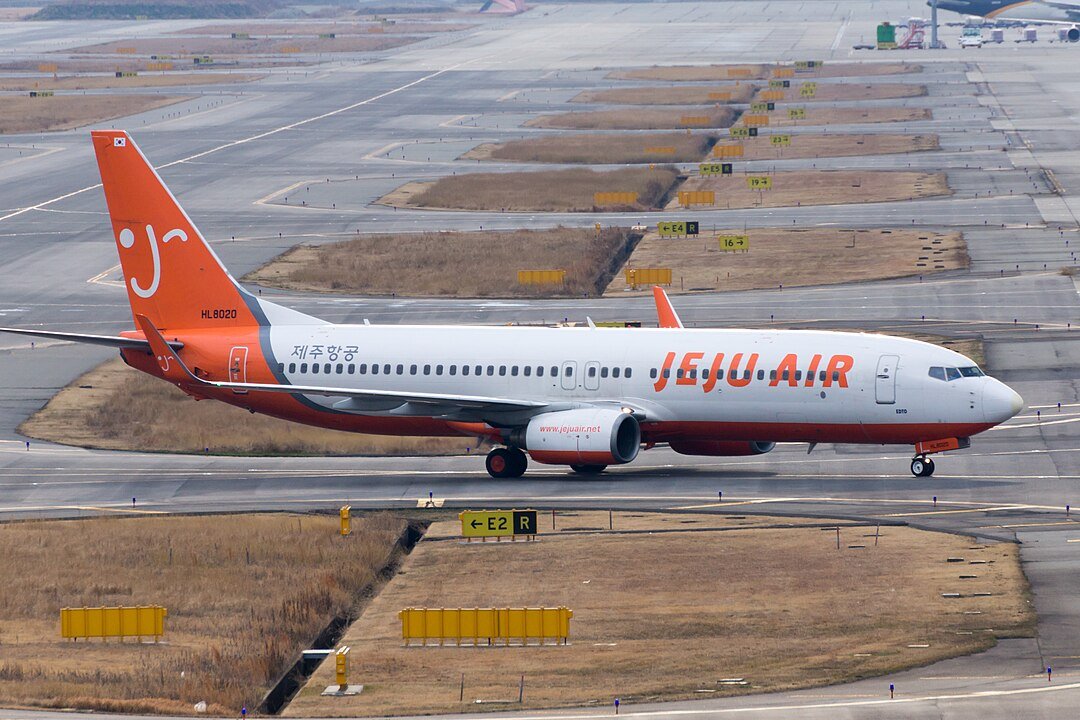
The tragic crash of a Jeju Air Boeing 737-800 at Muan International Airport has left 179 out of 181 passengers dead, raising urgent questions about the safety of airport infrastructure; one of the most pressing issues concerns a concrete barrier 250 meters from the runway's end. This structure played a pivotal role in the severity of the disaster, turning what might have been a survivable incident into one of South Korea’s worst aviation tragedies in decades.
So What is the Purpose of this Concrete Barrier?
The concrete barrier was constructed to elevate the Instrument Landing System (ILS) localizer beacon, a critical component that guides aircraft along the runway’s centerline during landings. At Muan International Airport, the land beyond the runway slopes downward, necessitating the localizer’s elevation on a 2-meter-tall structure. This design ensured compliance with International Civil Aviation Organization (ICAO) standards, which require a clear and uninterrupted signal for safe landings.
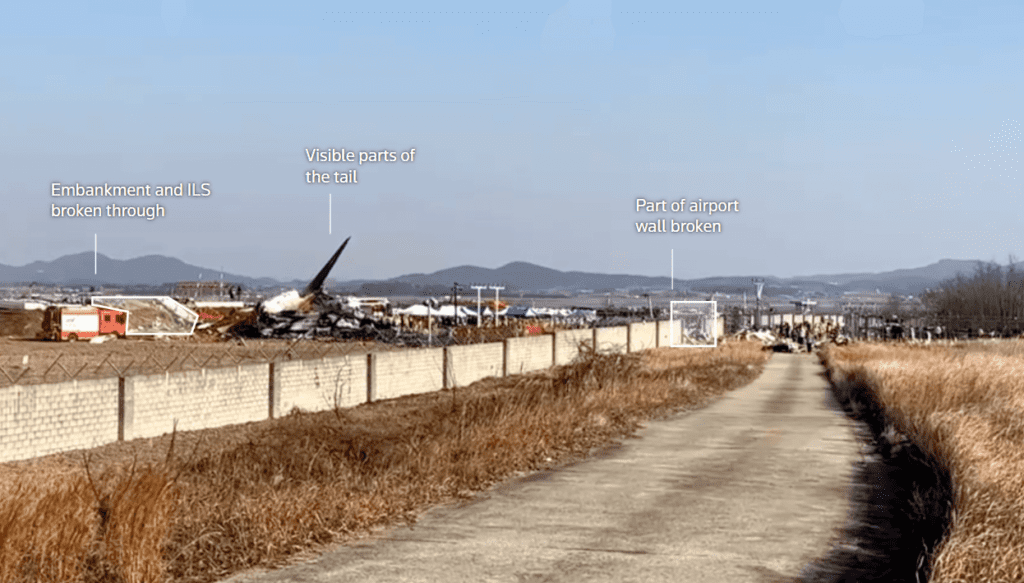
Although the barrier met ICAO regulations in terms of placement, its construction from concrete has sparked outrage and concern. Aviation safety experts argue that obstacles near runways should be designed to minimize harm in the event of a collision. Captain Chris Kingswood, a Boeing 737 pilot, pointed out to BBC News that “obstacles within a certain range and distance of the runway are required to be frangible,” meaning they should break upon impact to reduce the risk to aircraft and passengers. Concrete, by its very nature, is anything but frangible.
This issue has drawn attention to Annex 14 of the ICAO’s guidelines, which mandate that any equipment located within 240 meters of the runway's end must be frangible and mounted as low as possible. However, the barrier at Muan Airport was positioned 250 meters away, technically outside this zone. This 10-meter difference meant the structure was deemed compliant, even though its rigid construction posed a significant hazard.
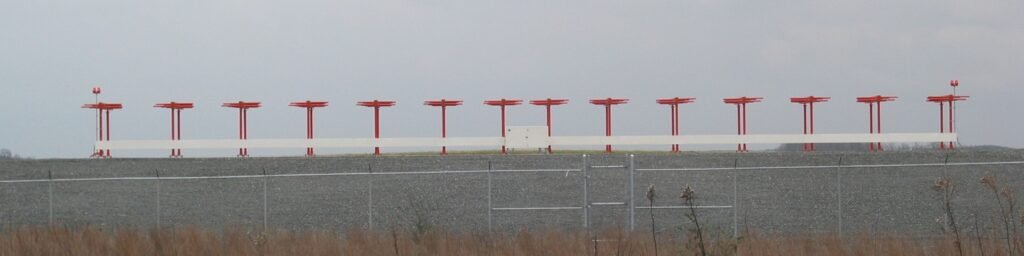
Photo by Chad Snoke via Wikimedia Commons
The South Korean transport ministry has confirmed that similar concrete structures are in use at other airports both domestically and internationally. This raises broader concerns about the application of ICAO standards and whether airports worldwide are prioritizing compliance over safety. Aviation safety expert David Learmount highlighted the dire consequences of such decisions, noting that the Jeju Air flight “would have come to rest with most—possibly all—those on board still alive” if the concrete barrier had not been there.
Sources:
- Simple Flying
- Featured image by lasta29 via Wikimedia Commons