
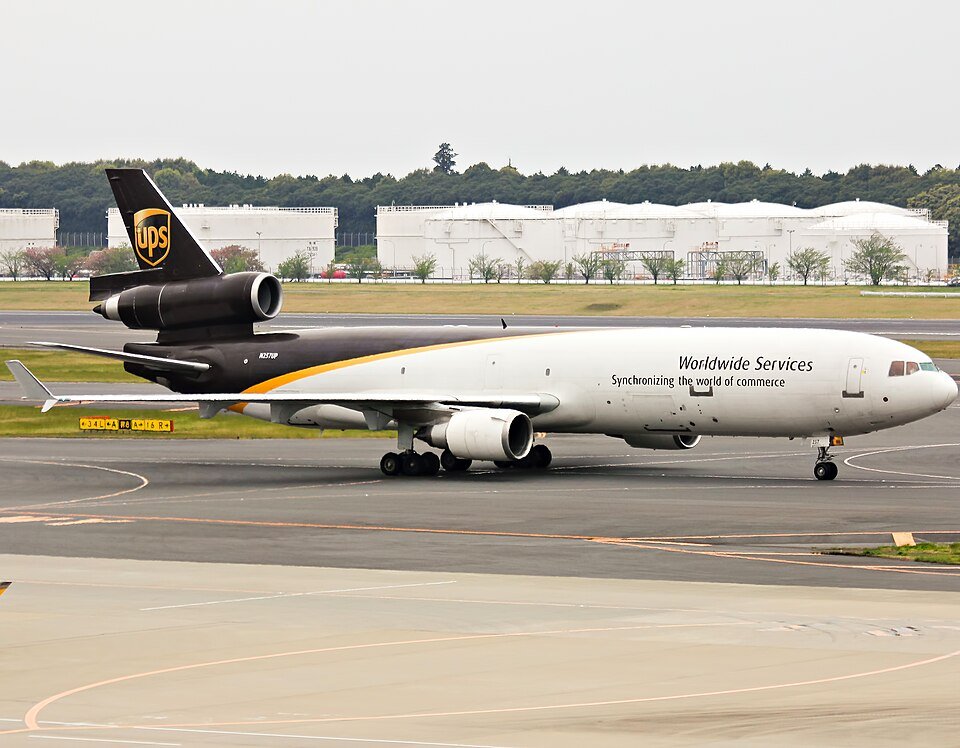
A UPS McDonnell Douglas MD-11 cargo aircraft crashed during takeoff at Louisville International Airport on Tuesday, November 4, 2025, killing at least 12 people and injuring nearly 20 others. The engine detached from the aircraft during the takeoff sequence, with witnesses reporting a fire in the left wing before the plane burst into flames.
The crash occurred at UPS's main air cargo hub, disrupting operations at one of the company's most critical facilities. Flight 2976 was bound for Honolulu when the incident happened, with all three crew members among the fatalities along with nine others on the ground.
Federal investigators have launched a comprehensive probe into the mechanical failure that caused this devastating accident. The investigation will examine the aircraft's maintenance history, the sequence of events leading to the engine separation, and the factors that contributed to this tragic loss of life at one of aviation's busiest cargo hubs.
UPS McDonnell Douglas MD-11 Crash During Takeoff in Louisville: Event Overview
A UPS MD-11 cargo plane crashed shortly after takeoff from Louisville Muhammad Ali International Airport on November 4, 2025, killing multiple people and disrupting operations at the company's primary air hub. The aircraft experienced a catastrophic engine failure during departure, leading to a fiery crash that impacted nearby businesses.
Timeline of the Accident
The incident occurred on Tuesday afternoon, November 4, 2025, during takeoff operations at Louisville Muhammad Ali International Airport. UPS flight 5X2976 crashed on takeoff from Louisville airport while departing for Honolulu.
Key Timeline Events:
- Late Tuesday afternoon: Aircraft begins takeoff sequence
- During takeoff: Engine separated from plane during takeoff
- Immediately after: Plane crashes and erupts into flames
- Shortly after crash: Emergency response teams arrive at scene
The crash occurred at UPS Worldport, the company's main air cargo hub in Louisville, Kentucky. Airport operations were immediately suspended following the incident.
Details of UPS Flight 2976
UPS flight 2976 burst into flames and hit buildings during takeoff, carrying three crew members aboard the cargo aircraft. The flight was scheduled as a cargo route from Louisville to Honolulu, Hawaii.
Flight Details:
- Flight Number: UPS 2976 (5X2976)
- Aircraft Type: McDonnell Douglas MD-11F
- Route: Louisville to Honolulu
- Crew: 3 members
- Cargo Status: Freight operation
The UPS MD-11F was bound for Honolulu with three crew onboard when the accident occurred. The MD-11 is a wide-body cargo aircraft designed for long-range freight operations.
All three crew members were confirmed among the fatalities. The aircraft was operating as a scheduled cargo flight within UPS's extensive air network.
Crash Site and Immediate Impact
The plane crashed and exploded shortly after taking off from a Kentucky airport, creating a large fire and causing significant damage to the surrounding area. The crash site encompassed areas beyond the airport property.
Casualty Information:
- Crew fatalities: 3 confirmed
- Total fatalities: At least 12 people are dead
- Additional casualties: 9 others who have not yet been identified
The aircraft impacted buildings near the airport during the crash sequence. The incident disrupted operations at UPS Worldport, affecting the company's air cargo operations.
Emergency responders quickly arrived at the scene to combat the resulting fire and assist with rescue operations. Black boxes recovered from the wreckage will aid investigators in determining the cause of the accident.
Investigation and Contributing Factors
The NTSB has officially launched an investigation into UPS Flight 2976, focusing on mechanical failures, weather conditions, and data recovery from the aircraft's recording systems. Multiple investigative teams are examining the 34-year-old McDonnell Douglas MD-11's maintenance history and operational circumstances.
Mechanical Failures and Engine Issues
The McDonnell Douglas MD-11 freighter involved in the crash was a 34-year-old aircraft, which is not unusual in the air cargo industry despite being older than typical passenger jets. The MD-11 is powered by three General Electric CF6-80C2D1F engines, with investigators examining whether engine separation or failure contributed to the accident.
Engine-related issues represent a critical focus area for investigators. The CF6-80C2D1F engines have established service records, but any potential mechanical failures during the takeoff phase could have been catastrophic.
Boeing, which inherited the MD-11 program when it merged with McDonnell Douglas, maintains technical documentation that investigators are likely reviewing. The aircraft's age raises questions about component fatigue and maintenance intervals.
Role of Weather and Flight Conditions
Weather conditions at Muhammad Ali International Airport during the November 4, 2025 takeoff are under scrutiny by investigators. The crash occurred around 5:15 p.m., with investigators examining key factors that led to the fiery accident.
Visibility, wind patterns, and atmospheric conditions at the time of departure form part of the comprehensive investigation. These environmental factors could have influenced the aircraft's performance during the critical takeoff phase.
Ground conditions, including runway surface and airport operations, are also being evaluated as potential contributing elements to the crash sequence.
NTSB and Other Investigative Authorities
The National Transportation Safety Board dispatched a team of investigators to Louisville on Wednesday following the Tuesday crash. The NTSB leads the federal investigation with support from various aviation experts and manufacturer representatives.
Aviation attorney Pablo Rojas and other legal experts are monitoring the investigation's progress as families and stakeholders await answers. The NTSB's systematic approach includes examining maintenance records, crew qualifications, and operational procedures.
Federal investigators coordinate with local authorities and UPS officials to gather comprehensive evidence. The investigation timeline typically extends months or years depending on complexity.
Recovery of Black Boxes and Data Analysis
Recovery of the aircraft's flight data recorder and cockpit voice recorder represents a priority for investigators examining the crash sequence. These black boxes contain crucial information about the aircraft's final moments and crew communications.
The flight data recorder captures hundreds of parameters including engine performance, flight controls, and aircraft systems status. Meanwhile, the cockpit voice recorder preserves crew conversations and cockpit audio that could reveal critical decision-making processes.
Data analysis from these recording systems will provide investigators with precise information about what occurred during takeoff. The information extracted from the black boxes typically takes weeks to fully analyze and interpret.